



We’ve built on our recent self-service and AI updates with a set of releases focused on improving how teams handle alerts, investigate risk, and operate at scale.
March's updates reduce friction in alert workflows, surface richer context during investigations, and expand identity and business verification coverage across regions.
The highlights:
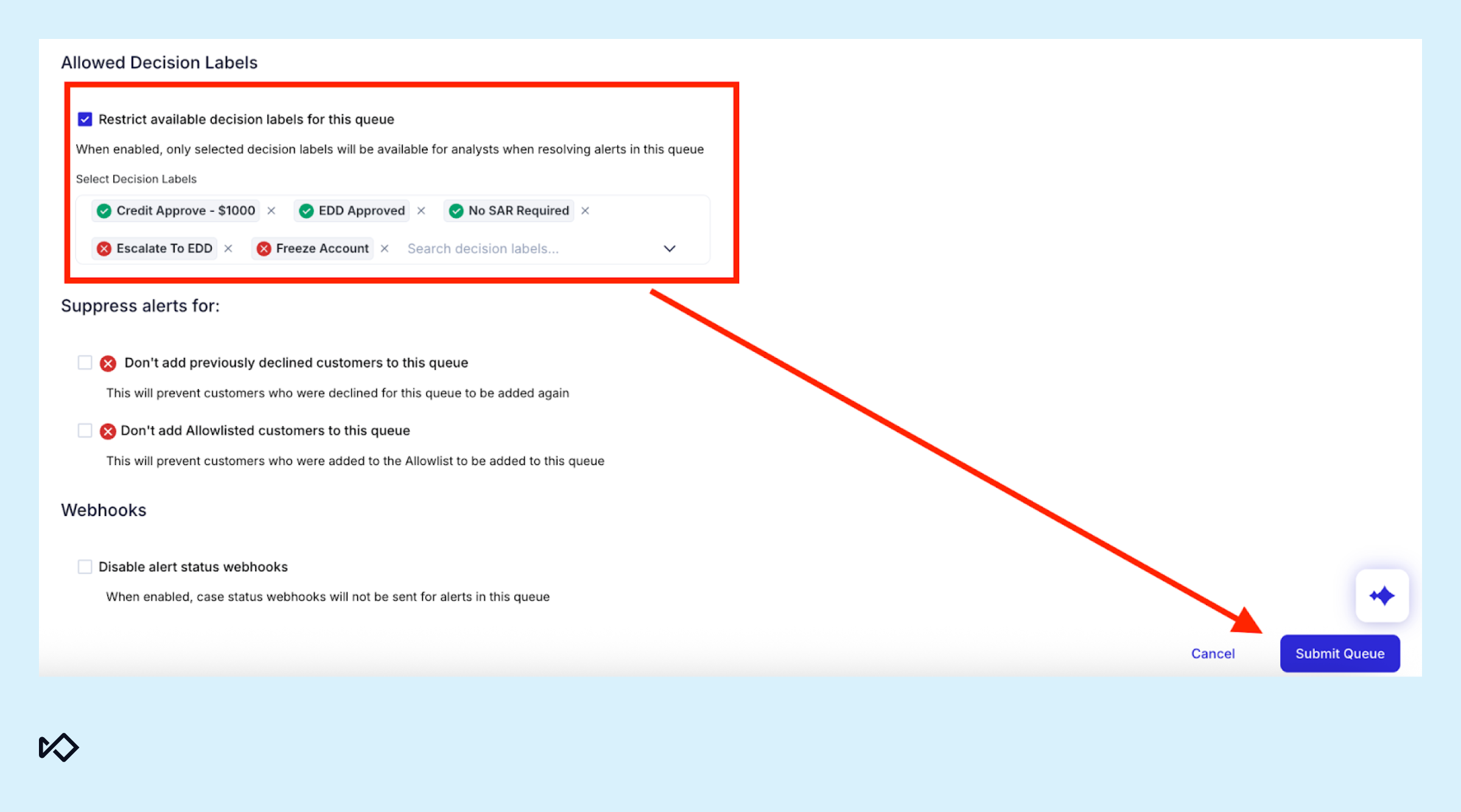
- Queue-specific decision labels. Show each team only the labels that fit its workflow.
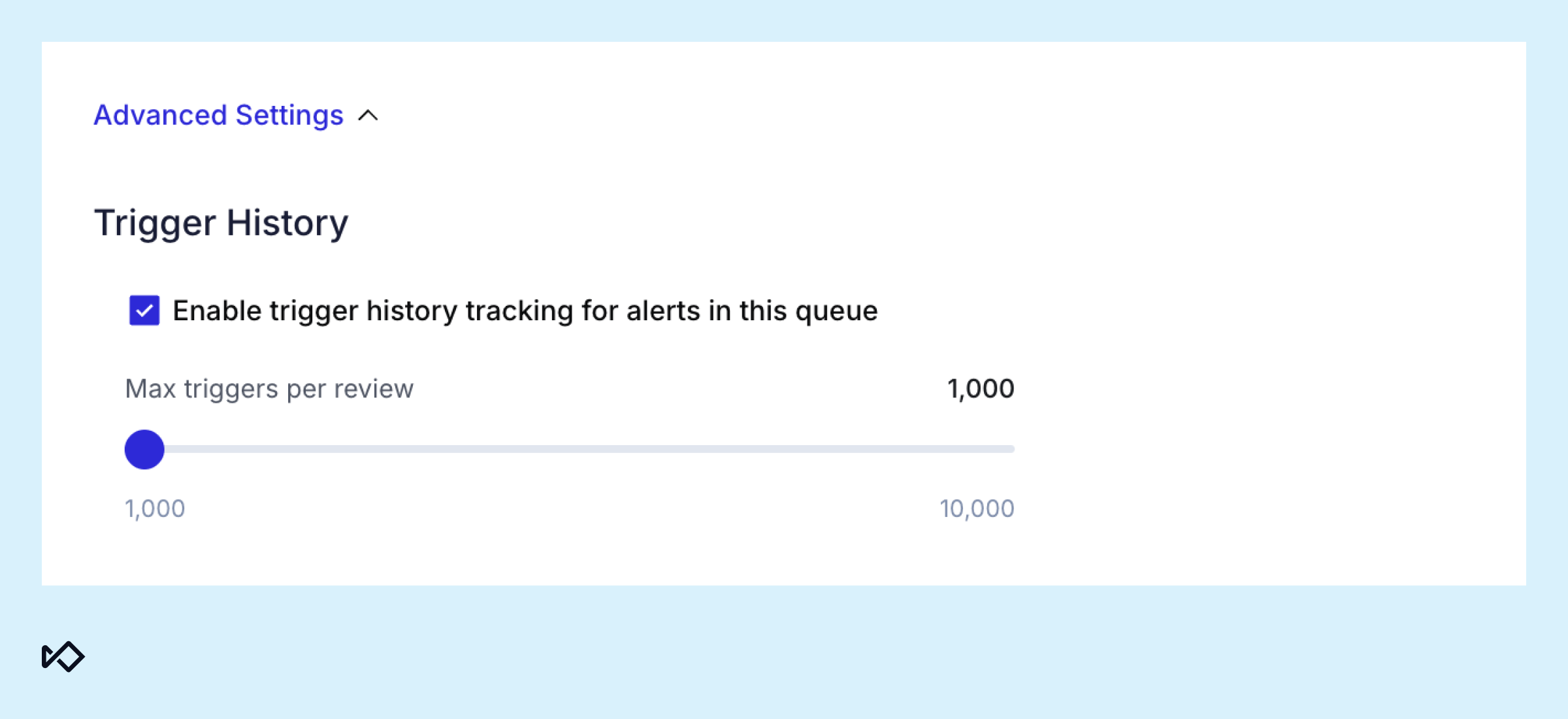
- Alert trigger history. Surface every subsequent transaction tied to an alert while the alert is still open.
- International tax ID verification. Verify tax IDs across ~20 countries to support OFED’s Crypto-Asset Reporting Framework and local reporting requirements.
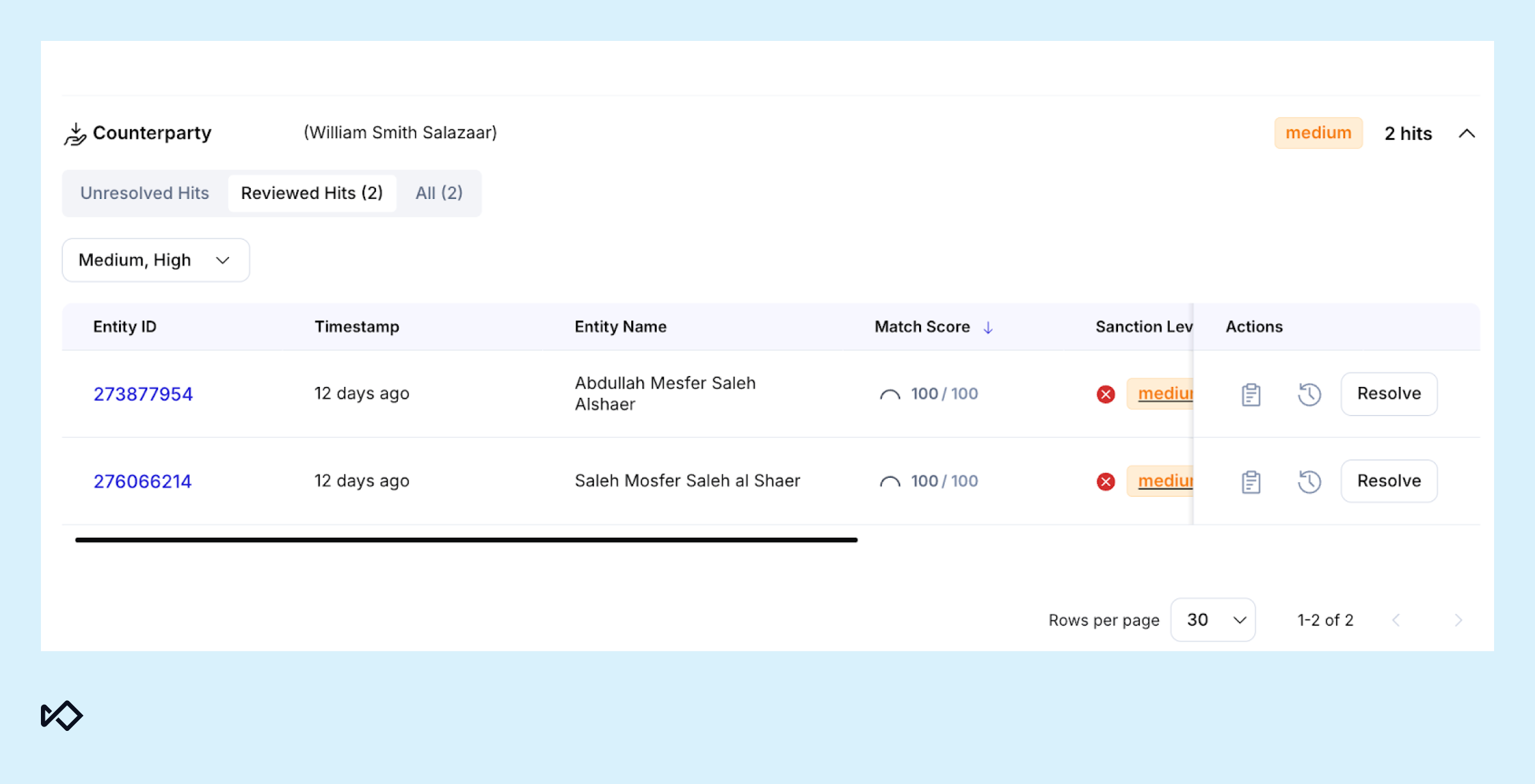
- Counterparty sanctions monitoring. Screen counterparties continuously and alert only when risk changes.
Faster, more accurate alert decisions
Queue-specific decision labels
When multiple teams share an alert queue, a single set of labels slows down decisions.Queue-specific decision labels fix this at the source. Each queue now surfaces only the options relevant to its workflow, so reviewers spend zero time filtering out noise. The result is faster triage, cleaner data, and fewer errors that stem from labels that weren’t necessary in the first place.
Global label governance remains intact while execution stays tailored at the queue level.
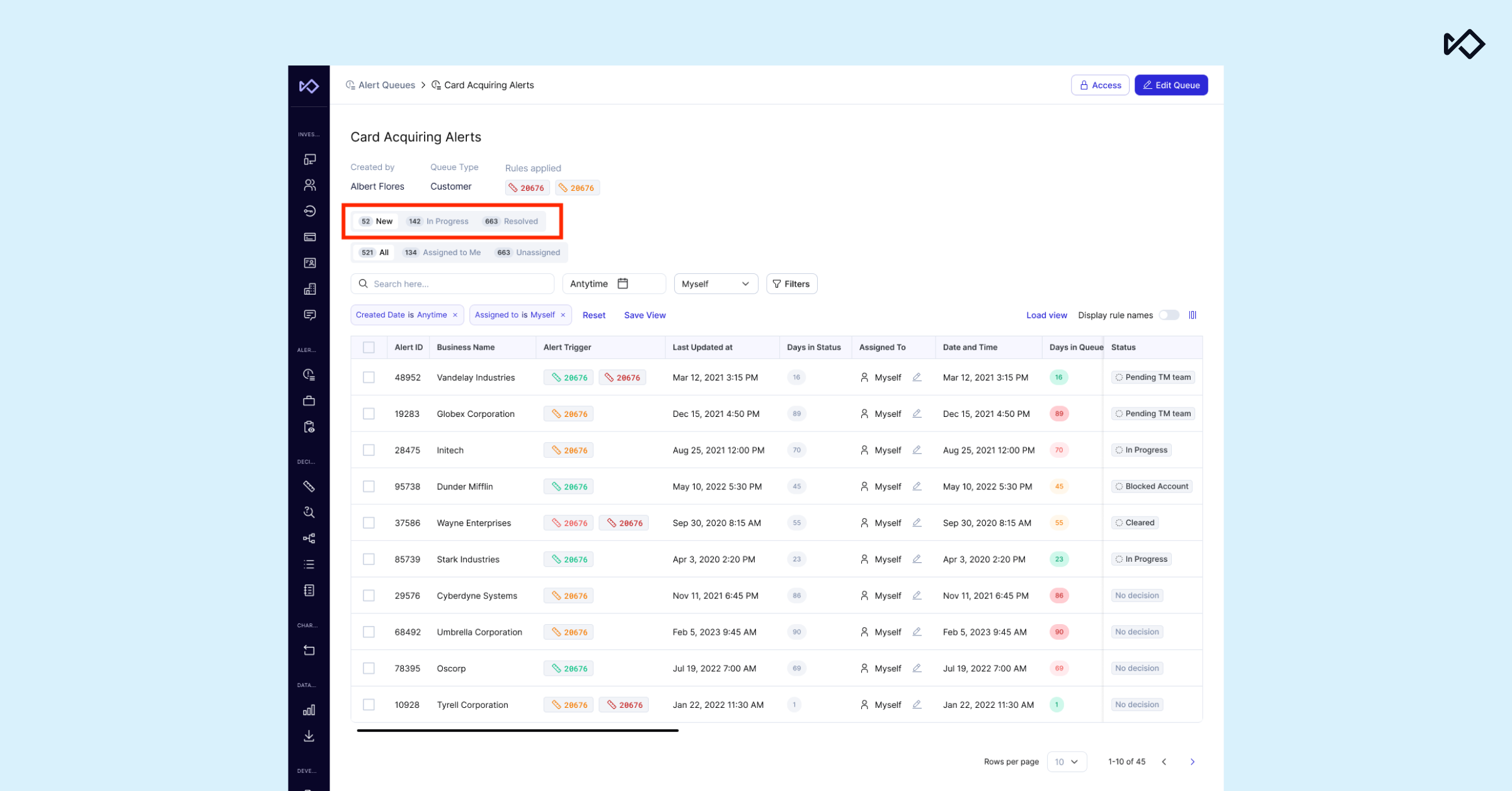
New and In Progress statuses for unresolved alerts
Unresolved alerts now carry New and In Progress statuses.
Reviewers can update the status as they begin working on an alert, so your team immediately sees which alerts still need attention and which ones already have ownership. Backlog tracking becomes more accurate, and your team eliminates duplicate work on the same alert.
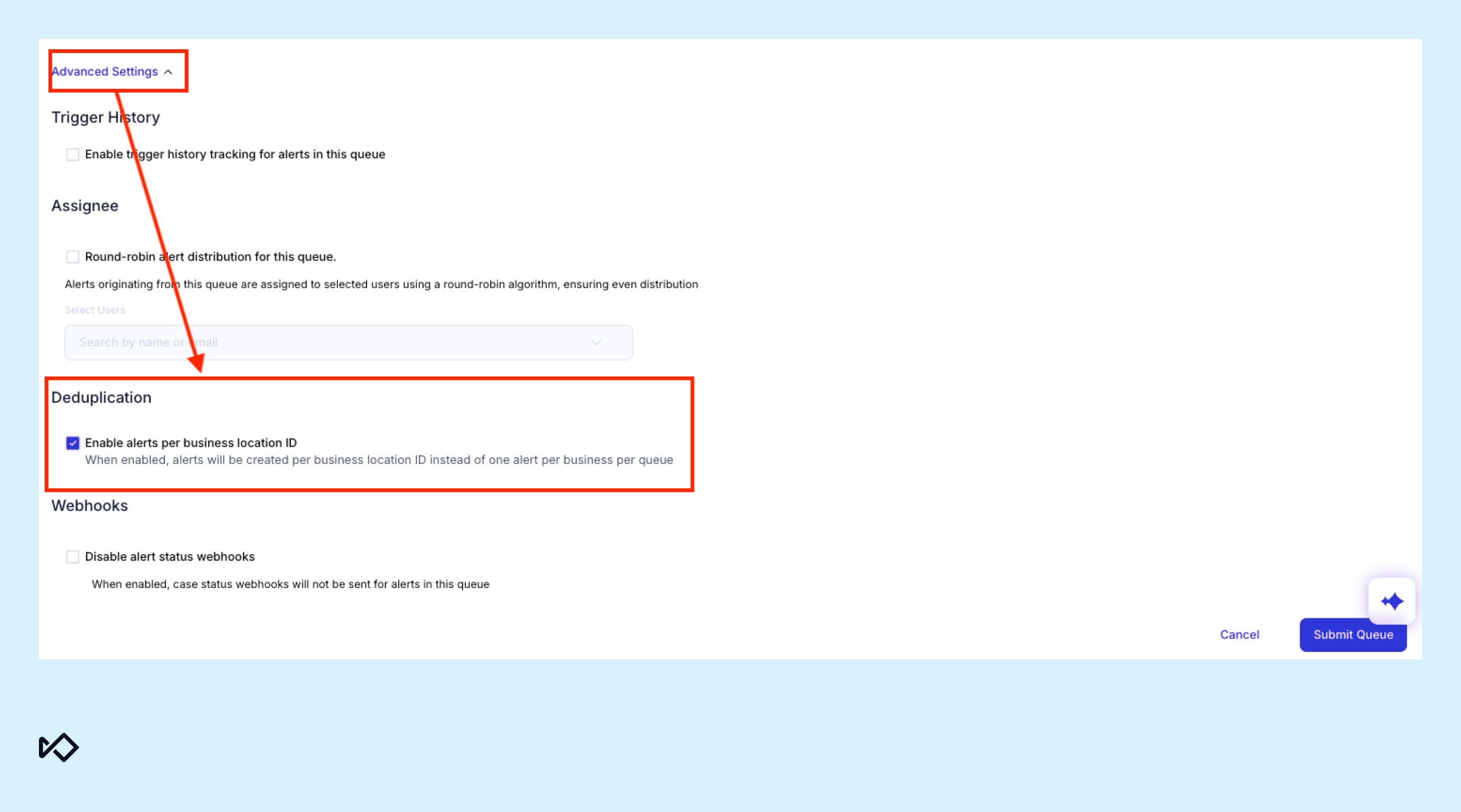
Business location-level alerts
Instead of grouping alerts at the business level, Sardine now generates Business Location ID. For example, rather than one alert for "Starbucks," each individual store such as Starbucks at 123 Main St, gets its own alert.
Reviewers see only the activity tied to their location, making ownership clear and routing more direct.
Full investigation context in real-time
Alert trigger history
Investigating alerts often require waiting for additional activity or piecing together related transactions across systems.
With alert trigger history, your team can surface every transaction tied to an alert while the alert remains open, including timestamps, session keys, transaction IDs, and triggering rules. The full sequence of activity is visible in real-time, so you can make faster decisions with complete context and stronger audit defensibility.
Expanded identity and compliance coverage
International Tax ID verification
Sardine now verifies Tax IDs electronically across approximately 20 countries.
The system prioritizes Tax ID-based matching when available and falls back to address-based verification when it is not. Country-specific logic handles cases where national ID and tax ID overlap or derive from each other.
Results return as EXACT, FUZZY, or NOMATCH, providing a clear signal to act on, without manual interpretation.
Business entity attributes for KYB
Representative, Ultimate Beneficial Owners, and Persons of Significant Control can now be evaluated directly within rules and workflows.
You can now incorporate individual-level risk signals into business onboarding and monitoring decisions, rather than relying solely on entity-level checks. Higher-risk ownership structures become easier to identify and route appropriately.
Counterparty sanctions monitoring
Teams can now continuously monitor counterparties after submission.
Instead of re-screening the same entities on every transaction, the platform tracks them over time and generates alerts only when sanctions status changes or new data becomes available. This reduces repetitive re-screening, all while meaningful changes in risk continue to surface.
Customizable investigation workflows
Configurable transaction views
You can now configure the Transaction Details page to reflect how your team conducts investigations.
Reorder widgets, hide unnecessary sections, and save layouts across sessions. Plus, admin-defined default views support consistency while still allowing flexibility for different workflows.
Better visibility into business risk
Business Credit page
We now have a dedicated Business Credit page available for U.S. onboarding.
Credit quality indicators such as payment history, public records, and credit utilization are available directly within the Sardine dashboard, so you can easily incorporate credit signals into onboarding decisions.
Advancing fraud and compliance operations with Sardine AI
March’s releases streamline how teams manage alerts, investigate activity, and scale compliance workflows.
Teams move through queues faster, review alerts with full context, reduce repetitive work, and expand verification coverage, all without adding complexity.
Want to see these features in action? Get in touch for a demo. Current customers can visit our release notes and changelog for more details.